
Throughout history, humans have built boundaries. Both individually and collectively. Boundaries that have allowed us to differentiate ourselves, appropriate things, or defend ourselves. And they also define what is normative and what is not. And they are very diverse: visible, invisible, conscious, and unconscious.
Why do we build walls?
Inside the Sínia, you can see a fragment of the outer face of the Roman wall of Barcino (Barcelona). It is a section of the wall and part of its square towers from the late 3rd century AD. Over the centuries, the city grew outside the Roman wall and its defensive function disappeared. It was then that buildings began to be constructed on both sides of the wall.
The fragment of the Roman wall as a starting point to explore and discuss themes related to the everyday life of the center, emphasizing the symbolism of the boundary.
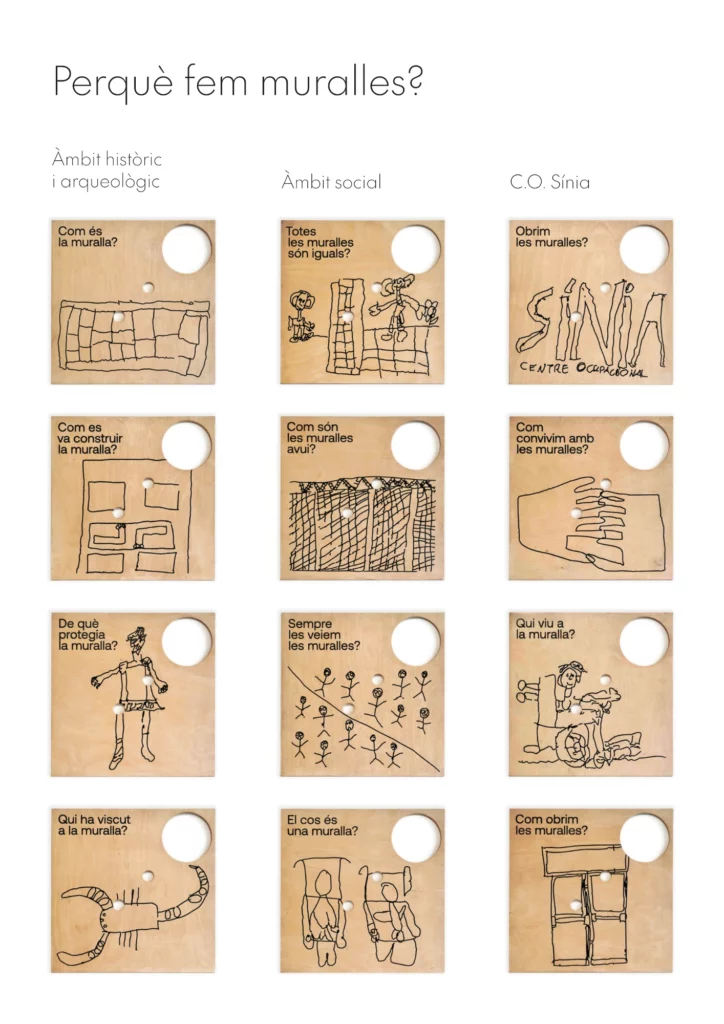
The wall, both physically and symbolically, presents an opportunity to work on perception and action toward the context that surrounds us. The proposal is structured around twelve questions organized into three axes: Historical and Archaeological Domain, Social Domain, and C.O. La Sínia.
Questioning is prioritized over dogmatic affirmation, and uses museography as a vehicle, a medium, not an end in itself.
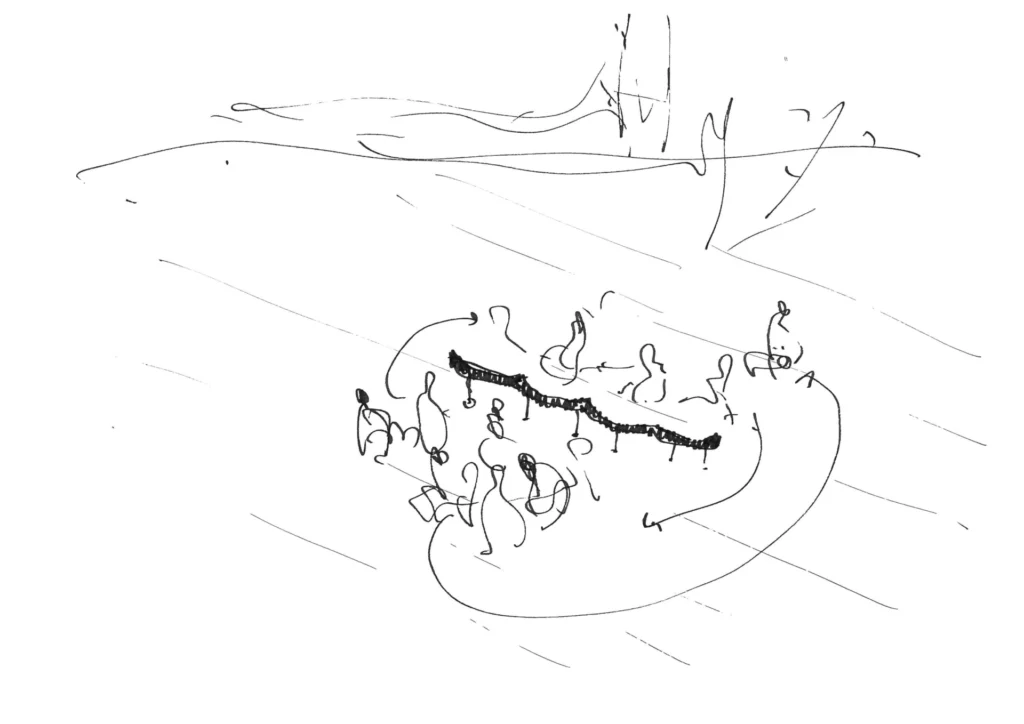
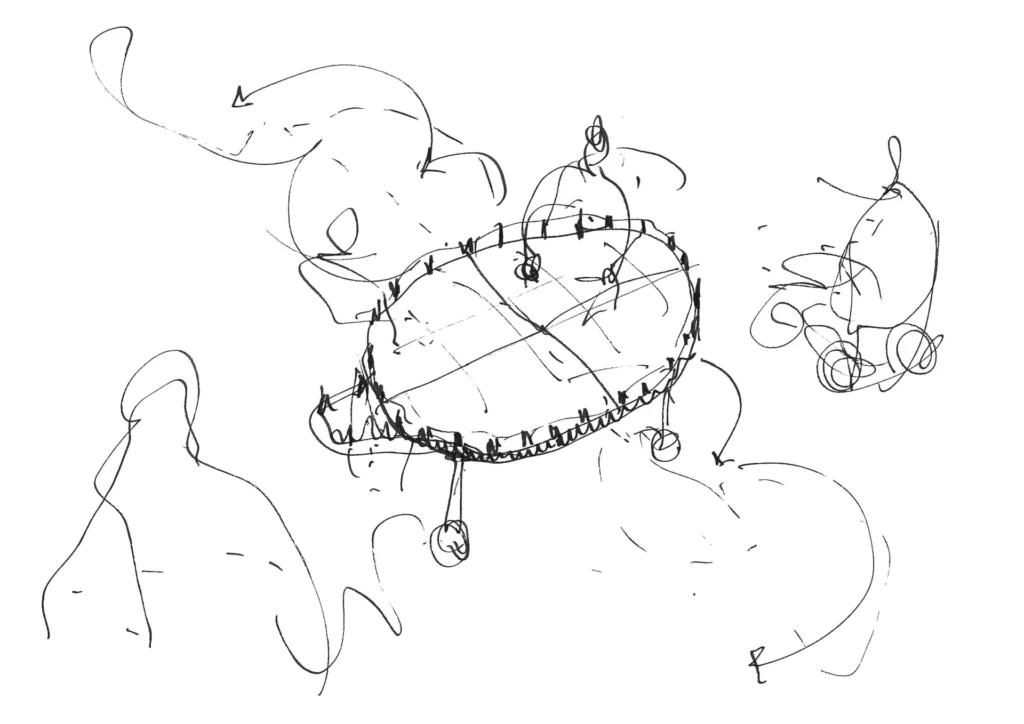
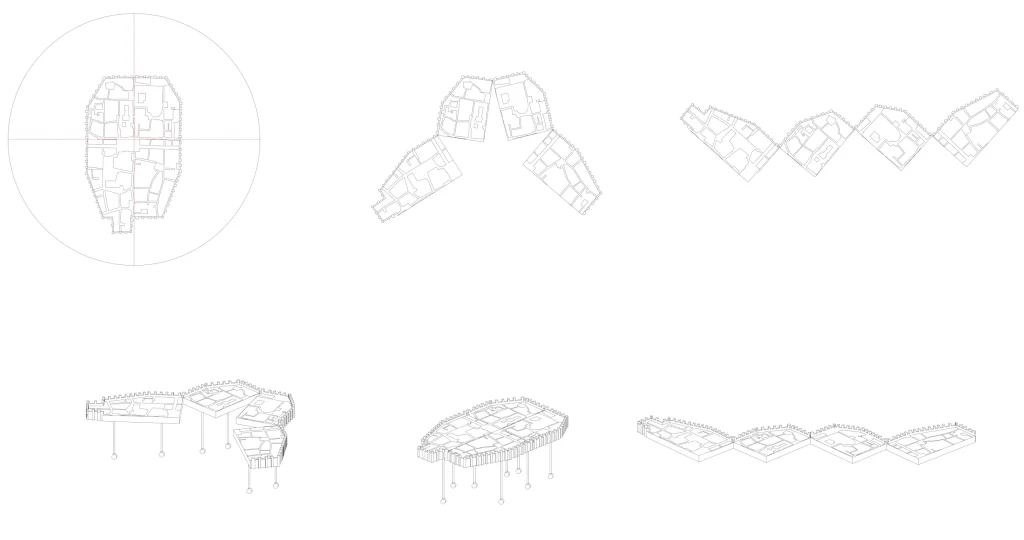
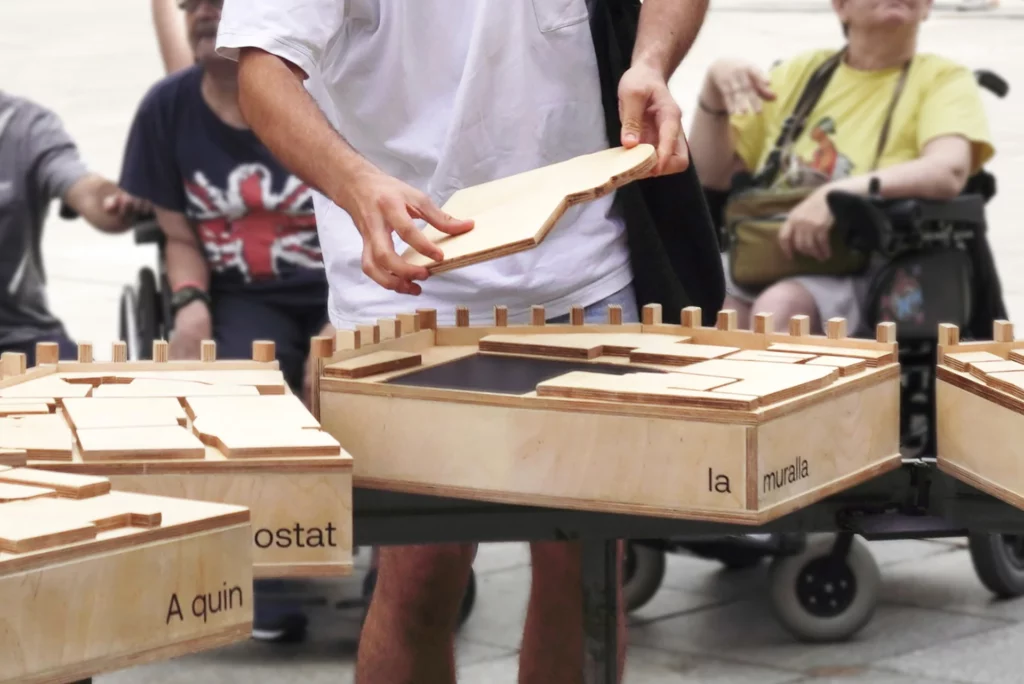
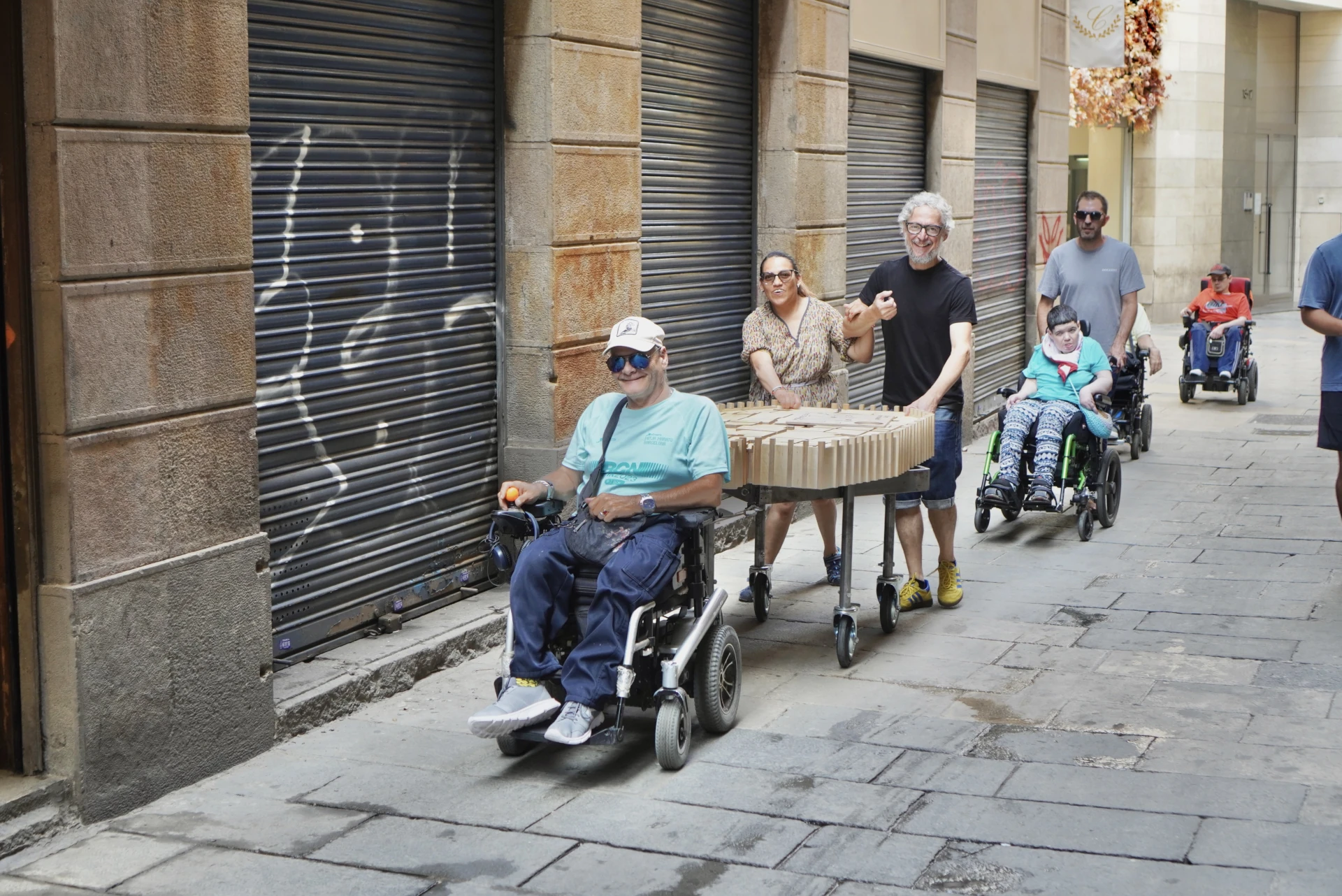
A wheeled device is presented that highlights the 3rd-century AD wall of Barcino. This model serves as a centerpiece in guided tours of Ciutat Vella, where past and present are contrasted through the voices and experiences of CO Sínia’s users.
It acts as a symbolic element with a notable presence in public space. Once attached to a wheelchair, it becomes a traveling landmark that counteracts the daily dynamics of tourism overcrowding.
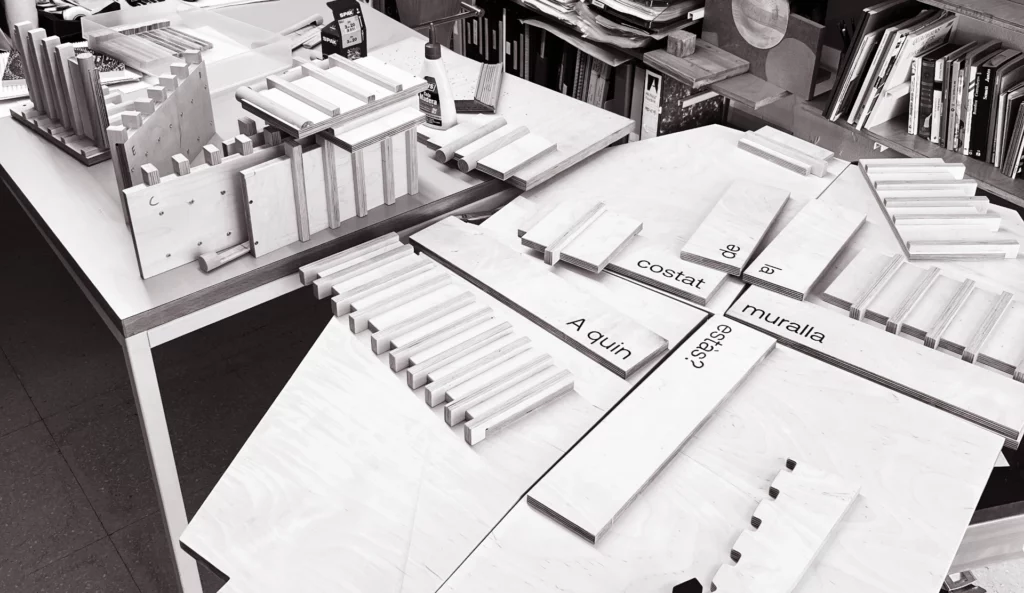
Each city block can be lifted, revealing the hidden part, uncovering what is buried. A black surface appears that becomes a chalkboard, allowing for writing, erasing, and layering content. Not only to explore the city’s historical past but also the accessibility realities of the present.